
Table of Contents
- What Makes a Candle Clean-Burning
- Soy Candles vs Beeswax Candles: Which Burns Cleaner
- Non-Toxic Candles for Home: Ingredients That Matter
- How to Burn Candles Safely Indoors
- Scent Strength and Sensitivity: Finding the Right Match
- Cost, Value, and What You're Actually Paying For
- Frequently Asked Questions
Last Updated: October 9, 2026
What Makes a Candle Clean-Burning
Clean-burning candles are those that produce minimal soot, smoke, and emissions while maintaining a steady flame and even wax pool. The key factors determining whether a candle burns cleanly come down to two things: the wax itself and the wick. These elements work together to determine how much particulate matter ends up in your air and how long your candle actually lasts.
Wax type matters more than most people realize. Natural waxes like soy, beeswax, and coconut wax burn more completely than paraffin, which is a petroleum byproduct that often leaves black residue on walls and ceilings. The combustion process differs fundamentally between these materials. When a wax burns efficiently, it converts nearly all of its mass into heat and light rather than smoke and soot.
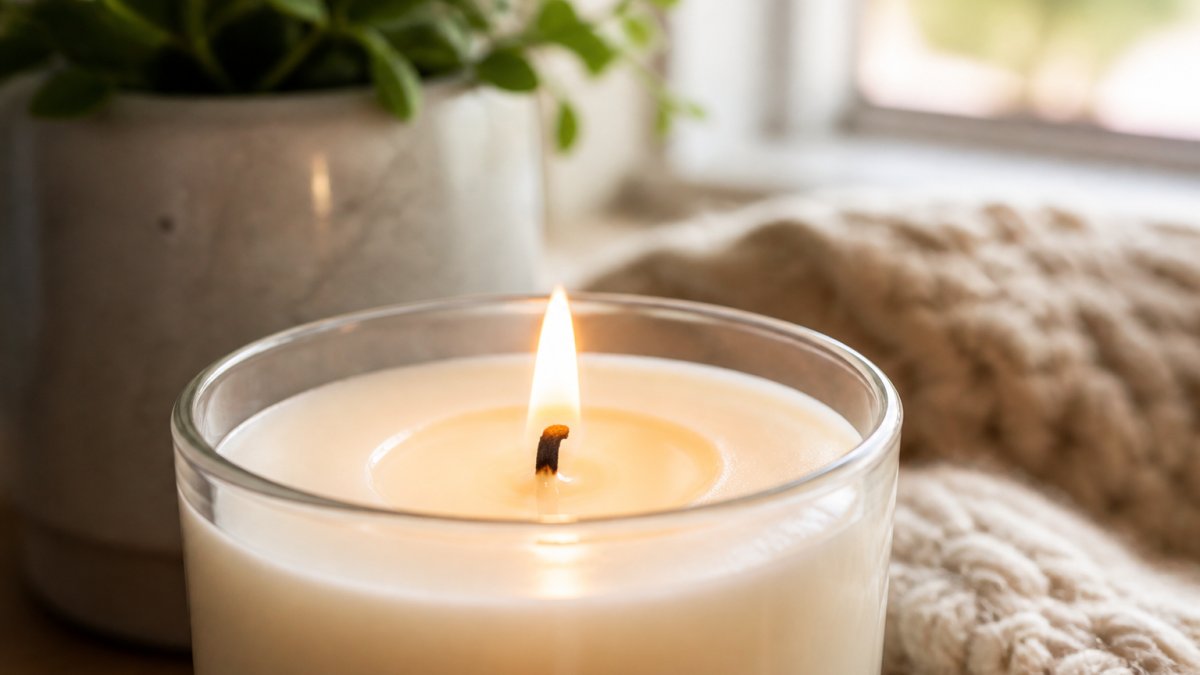
Wick construction is equally critical. A wick that's too thick will burn too hot and create excessive smoke. A wick that's too thin will tunnel, leaving wax on the sides of the container while the center burns down. The material matters too, cotton and wood wicks tend to perform better than synthetic options. Cotton wicks, in particular, are designed to curl as they burn, which helps them self-trim and prevent buildup.
At Mam Jam's, we focus on these fundamentals because they directly affect what you're breathing. Hand-poured candles with natural soy wax and properly sized cotton wicks create a cleaner burn from the first light. The difference becomes obvious within the first few minutes: less smoke, a more stable flame, and no black residue accumulating on your ceiling.
Soy Candles vs Beeswax Candles: Which Burns Cleaner
Soy wax and beeswax are the two most popular natural alternatives to paraffin, but they perform differently. Soy candles have become mainstream because they're renewable, affordable, and burn relatively cleanly. Beeswax is the premium option, it burns hotter, lasts longer, and produces a naturally sweet scent that many people prefer. But which one actually burns cleaner?
Soy wax benefits and limitations are worth understanding clearly. Soy candles burn at a lower temperature than paraffin, which means less soot production and a slower, more controlled burn. They're also biodegradable and come from a renewable crop.
Beeswax advantages are substantial if you're willing to invest more. It burns hotter and produces a brighter flame, which many find more aesthetically pleasing. Beeswax candles last significantly longer than soy alternatives because the wax is denser.
What the evidence actually says about "cleaner" burning
When comparing soot and emissions, the difference between soy and beeswax is smaller than marketing often implies. Both are natural waxes that burn more completely than paraffin, but neither is completely emission-free.
Beeswax's negative ion claim is frequently repeated but lacks robust scientific consensus. While some small studies suggest negative ions can reduce airborne particles, the effect from a single candle in a typical room is likely negligible. Treat this as a nice bonus, not a primary reason to buy.
Burn time and cost per hour
Beeswax candles typically burn 2-3 times longer than soy candles of the same size. For example, a 8 oz soy candle might burn for 40-50 hours, while an 8 oz beeswax candle could burn for 80-100 hours. However, beeswax costs roughly 2-3 times more per ounce. When you calculate cost per burn hour, the two can end up surprisingly close.
Which should you choose?
For most homes, soy candles offer the best balance of clean burn, affordability, and scent variety. Beeswax makes sense if you prioritize longevity, prefer a natural honey scent, and don't mind the higher price or limited fragrance options.
Non-Toxic Candles for Home: Ingredients That Matter
What you're actually burning matters more than marketing claims suggest. A candle labeled "natural" or "eco-friendly" might still contain synthetic fragrances and additives that release harmful compounds when heated. True non-toxic candles require transparency about every ingredient.
Fragrance transparency and essential oils are where many candles fall short. Synthetic fragrances often contain phthalates, which are chemicals used to make scents last longer (Evaluation of pollutants in perfumes, colognes and health effects on the consumer). When heated, these compounds can off-gas into your home. Essential oils are a cleaner alternative, but they're also more expensive and have a shorter scent life. Some candle makers blend essential oils with natural fragrance compounds to balance cost and performance. The honest move is to look for brands that list their fragrance sources explicitly, if a label just says "fragrance" with no breakdown, you don't know what you're breathing.
What to avoid is straightforward: paraffin wax is a petroleum product that releases toluene and benzene when burned, both known air pollutants. Phthalates, as mentioned, are endocrine disruptors. Synthetic dyes can also release harmful compounds. Lead-core wicks, though less common now, were once standard and are absolutely worth avoiding. Many candle makers now use paraffin blends to reduce costs, so reading the label carefully is essential.
At Mam Jam's, we use all-natural soy wax and fragrance that's free from phthalates and synthetic additives. This transparency matters because you're bringing these candles into your bedroom, living room, and spaces where you spend hours breathing the air around them.
How to Burn Candles Safely Indoors
Burning a candle safely indoors requires understanding a few practical habits that most people don't follow. The way you burn a candle determines whether it performs cleanly or creates problems.
Preventing tunneling and managing soot are the two most common issues. Tunneling happens when the center of the candle burns down faster than the edges, leaving wax stuck to the sides of the container. This wastes product and can cause the wick to become buried. The solution is to trim your wick to about one-quarter inch before each burn and allow the wax to pool completely across the surface on the first burn, this usually takes 2-4 hours depending on candle size. If tunneling has already started, you can fix it by burning the candle longer or using a heat gun to melt the outer wax edges.
Soot buildup is often blamed on the candle when it's actually a burning issue. A wick that's too long produces excess smoke and black residue. Trim the wick, ensure you're burning in a draft-free area, and make sure the candle isn't sitting directly under an air vent. If soot is still appearing, the candle itself might be the problem, synthetic waxes and poor-quality wicks are common culprits.
Ventilation and burn time best practices keep your indoor air quality stable. Never burn a candle for more than 4 hours continuously; this overheats the wax and can damage the container. Leave at least 2 hours between burns to let the wax cool. Crack a window slightly if you're burning multiple candles in a small space, though a single candle in a normal room doesn't require special ventilation. If you notice any headaches or respiratory irritation, extinguish the candle immediately, that's a sign something's wrong with either the candle or your ventilation.
Scent Strength and Sensitivity: Finding the Right Match
Not all clean-burning candles smell equally strong, and this matters if you're sensitive to fragrance. Scent throw, how far a candle's aroma travels, varies significantly based on wax type, fragrance concentration, and room size.
Soy candles typically have moderate scent throw because soy wax doesn't hold fragrance as effectively as paraffin. This is actually a feature if you're fragrance-sensitive. A scent-sensitive person burning a strong paraffin candle might experience headaches within minutes, while a soy candle with essential oil fragrance might be completely comfortable. Beeswax candles have even lighter scent throw because beeswax's natural honey aroma competes with added fragrances.
Scented versus unscented candles represent a spectrum. Unscented candles are pure wax with no added fragrance, useful if you want the ambiance without any scent, or if you're extremely sensitive. Lightly scented options exist but are less common because they're harder to market. Many people don't realize they can request custom scent levels from artisanal makers, who can create a candle with minimal fragrance if standard options are too strong.
If you're sensitive to strong smells, start with a small, unscented candle or one labeled as lightly fragranced. Burn it in a well-ventilated space for 30 minutes and observe how you feel. Many sensitivities are actually reactions to synthetic fragrances rather than natural scents, so testing a candle made with essential oils might reveal that you're fine with certain types of fragrance.
Cost, Value, and What You're Actually Paying For
Candle pricing creates confusion because there's no standard. A $5 candle from a mass retailer and a $30 artisanal candle might look similar but perform very differently. Understanding what drives the price, and how to calculate true value, helps you make smarter choices. A transparent cost-per-hour comparison reveals that the cheapest candle isn't always the worst value, and the most expensive isn't always the best.
What drives the price up
Hand-poured candles cost more because labor is involved. A machine can pour hundreds of candles per hour; a person pouring by hand manages dozens. This extra time translates directly to price. Natural waxes like soy and beeswax also cost more than paraffin. High-quality fragrance, especially essential oils, adds another layer of expense.
The cost-per-hour formula
Burn time is the metric that actually determines value. A $30 candle that burns for 50 hours delivers better value than a $10 candle that burns for 15 hours. Calculate the cost per hour: divide the price by the burn time to compare fairly.
These ranges are based on typical products from mainstream and specialty brands; actual performance varies by wick, fragrance load, and burning conditions. The key takeaway: a $30 candle isn't automatically a rip-off if it burns for 100 hours. Conversely, a $5 candle that tunnels and wastes half its wax might cost more per usable hour than a $20 candle that burns evenly.
What about packaging?
The pretty packaging argument is real, some of the price goes to aesthetics. But for makers like Mam Jam's and similar artisanal brands, the packaging reflects the care put into the product itself. The real difference between a cheap candle and a quality one isn't the jar; it's what's inside and how it performs when lit. When comparing candles, focus on wax type, wick material, fragrance disclosure, and burn time.
Frequently Asked Questions
What makes a clean-burning candle different from regular candles?
Clean-burning candles use natural waxes like soy or beeswax, lead-free cotton or wooden wicks, and fragrance from essential oils or phthalate-free sources. They produce minimal soot and smoke, burn evenly without tunneling, and release fewer emissions indoors. The key difference is ingredient transparency and construction quality, hand-poured candles with high-quality materials simply burn more efficiently and safely.
Are soy candles actually cleaner-burning than paraffin candles?
Yes. Soy wax is renewable and biodegradable, producing less soot than paraffin. Paraffin is petroleum-based and releases more emissions when burned. However, soy candles are only as clean as their wicks and fragrance, a soy candle with a lead-core wick or synthetic fragrance won't be truly clean-burning. Look for soy candles paired with cotton wicks and natural fragrance for the best results.
How do I prevent my candle from tunneling and creating soot?
Tunneling happens when the wick burns faster than the wax melts around it. To prevent it, trim the wick to 6mm before each burn, allow the wax pool to reach the edge of the container on the first burn (usually 2-4 hours), and never burn for more than 4 hours at a time. Ensure good air circulation in your room and avoid drafts near the candle. These practices also reduce soot buildup on walls and ceilings.
What should I look for when choosing a non-toxic candle for my home?
Check for natural wax (soy, beeswax, or coconut), lead-free cotton or wooden wicks, and fragrance sourced from essential oils or phthalate-free synthetics. Look for brands that list their ingredients transparently and avoid paraffin, synthetic dyes, and paraffin-based fragrances. Hand-poured, small-batch candles often have better quality control. If you're sensitive to scents, choose unscented or lightly scented options to avoid headaches.