

Table of Contents
- How to Remove Candle Wax: Quick Start
- How to Remove Candle Wax from Glass
- How to Remove Candle Wax from Fabric and Clothing
- How to Remove Candle Wax from Wood and Furniture
- How to Get Candle Wax Out of Carpet and Upholstery
- Removing Wax from Hard Surfaces and Candle Jars
- Handling Colored Wax and Stubborn Dye Stains
- Common Mistakes to Avoid
- Frequently Asked Questions
Last Updated: October 7, 2026
How to Remove Candle Wax: Quick Start
Spilled candle wax doesn't have to ruin your home, just match your removal method to the surface, since the wrong technique can damage wood, fabric, or glass.
At Mam Jam's, our hand-poured soy candles are designed to burn cleanly, but wax still finds its way onto surfaces you want to protect.
Here's the fastest approach for common surfaces:
- Glass: Heat and wipe, or freeze and scrape
- Fabric: Freeze solid wax, then pick it off; use heat for residue
- Wood: Gentle scraping only; never use heat
Your method depends on three factors: the surface material, how much wax is present, and whether colored wax may stain.
How to Remove Candle Wax from Glass
Glass handles both heat and cold well, so you have two reliable methods for candle holders and jars.
Method 1: Heat and Wipe
Heat softens wax for easy wiping and works fastest on large amounts of hardened wax.
Steps:
- Fill a bowl with hot water (not boiling)
- Dip a soft cloth into the hot water
- Press the cloth against the wax for 10-15 seconds
- Wipe the softened wax away with the cloth
- Repeat until all wax is gone
- Dry the glass with a clean towel
For stubborn residue, hold a hairdryer on low heat 6 inches from the glass, moving it slowly until the wax softens, gentle and scratch-free.
Method 2: Cold and Scrape
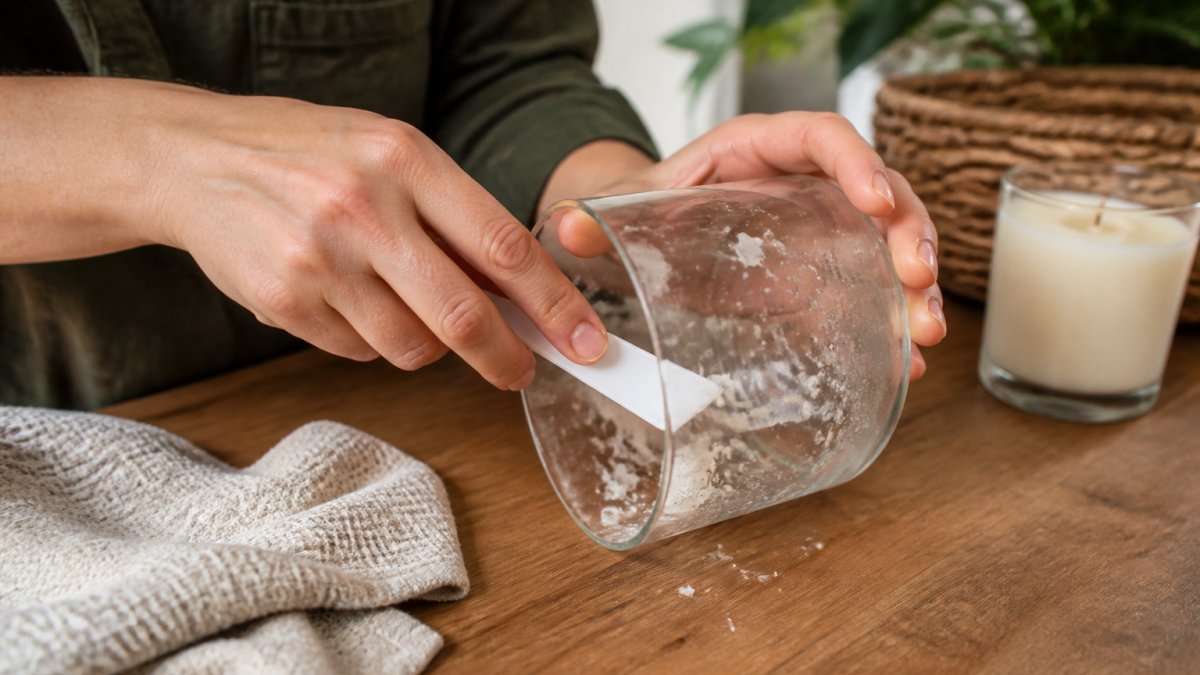
Freezing makes wax brittle so it peels off in large chunks, ideal for thick buildup on candle jars.
Steps:
- Place the glass in the freezer for 30 minutes
- Remove and let sit at room temperature for 2 minutes
- Use a plastic spatula or old credit card to scrape the wax
- Work from the edge inward with gentle pressure
- Wipe away remaining bits with a damp cloth
- Wash with warm soapy water
The cold method is less messy than heat because wax peels off in chunks rather than spreading, and it's safer if you're worried about splashing.
How to Remove Candle Wax from Fabric and Clothing
Fabric requires care: heat can set stains and cold can damage delicate fibers. Your approach depends on whether you're dealing with solid wax or oily residue.
Hardened Wax: The Freezer Method
If wax has pooled and hardened on fabric, freezing first removes the bulk without heat.
Steps:
- Let the wax cool completely (at least 2 hours)
- Place the fabric in the freezer for 1-2 hours
- Remove and flex the fabric gently to crack the wax
- Pick off large pieces by hand
- Use a soft brush to remove remaining bits
- Vacuum the fabric to catch small flakes
This works on clothing, curtains, and upholstered furniture, peeling wax away without spreading it into fibers.
Wax Residue: Heat and Blot
After removing hardened wax, oily stains often remain. Heat lifts them out, but you must blot rather than rub.
Steps:
- Place the fabric stain-side down on clean paper towels
- Heat a second cloth with hot water (not boiling)
- Press the hot cloth onto the back of the stain for 20 seconds
- The wax residue will transfer to the paper towel below
- Repeat with fresh paper towels until no more wax transfers
- Wash the fabric in cool water with mild detergent
Work from the back of the fabric to push residue out through the fibers rather than deeper in. Blotting moves the stain; rubbing spreads it.
How to Remove Candle Wax from Wood and Furniture
Wood is sensitive to heat and moisture. Never use boiling water or high heat, which can warp the finish and damage the wood.
Gentle Scraping for Solid Wax
Remove solid wax from wood carefully with a blunt tool, sharp edges gouge the finish.
Steps:
- Let the wax harden completely at room temperature
- Use a plastic spatula, butter knife, or old credit card
- Hold the tool at a low angle (almost flat against the surface)
- Scrape gently, following the wood grain
- Work slowly to avoid digging into the finish
- Remove remaining bits with a soft cloth
Angle matters: steep digs in, shallow slides under the wax. If you feel resistance, stop and adjust rather than forcing the tool.
Removing Oily Stains
After scraping, wax residue often leaves an oily mark on wood, requiring a different approach than fabric.
Steps:
- Mix equal parts white vinegar and water
- Dip a soft cloth in the mixture (wring out excess liquid)
- Wipe the stained area gently
- Dry immediately with a clean, dry cloth
- Repeat if needed
- Polish the wood with furniture oil if the finish looks dull
Vinegar cuts oily residue without damaging wood, but use very little liquid, too much water damages finishes, so wring the cloth until barely damp.
How to Get Candle Wax Out of Carpet and Upholstery
Carpet and upholstery trap wax in fibers, so removal is a two-step process: harden the wax, then lift the oily stain.
Spilled Wax: Ice and Vacuum
Fresh spilled wax is easiest to remove before it fully hardens. Ice helps you extract it cleanly.
Steps:
- Let the wax cool for 5-10 minutes until it starts to harden
- Place ice cubes in a plastic bag
- Hold the bag against the wax for 2-3 minutes
- The wax will become brittle and crack
- Pick off large pieces by hand
- Vacuum thoroughly to remove all fragments
Work quickly while the wax is still somewhat soft but firm enough to peel. If you wait too long, you'll need to repeat the freezing step.
Wax Stain: Heat and Extract
Once the solid wax is gone, heat extracts the oily stain from carpet fibers.
Steps:
- Place clean white paper towels over the stain
- Use a warm iron on low heat (test on a hidden area first)
- Press the iron onto the towels for 10-15 seconds
- The wax will transfer to the towels
- Move to a fresh section of towel and repeat
- Continue until no more wax transfers
- Blot with a damp cloth to remove any remaining residue
Paper towels absorb the melted wax as it transfers out; white towels show when the stain is gone. Never use high heat, which damages carpet fibers or melts synthetics.
Removing Wax from Hard Surfaces and Candle Jars
Hard surfaces are easiest to clean, but "hard" covers many finishes, and the wrong method can dull, etch, or scratch them. Pick your method by finish, not material name.
Match the method to the finish
| Surface finish | Best first move | Avoid |
|---|---|---|
| Sealed granite, quartz, laminate, glazed tile | Scrape, then warm damp cloth | Abrasive pads, razor blades on laminate |
| Unsealed stone (marble, travertine, limestone) | Scrape, then pH-neutral soap | Vinegar, lemon, rubbing alcohol, acids etch calcium-based stone |
| Painted or lacquered wood | Cold + plastic scraper only | Heat, water, solvents that lift paint |
| Waxed or oiled wood | Dry plastic scraper, dry cloth | Any water, it spots the wax finish |
| Metal (stainless, chrome) | Warm water + dish soap | Steel wool, which leaves micro-scratches |
| Glass, ceramic, porcelain | Heat or cold, either works | Thermal shock, don't pour boiling water on cold glass |
A useful rule: porous or acid-sensitive surfaces (unsealed stone, waxed wood, painted finishes) need cold and dry methods, while non-porous, heat-tolerant surfaces (glass, glazed ceramic, sealed stone) respond faster to heat.
Step-by-step for sealed countertops
- Let the wax harden fully, at least 30 minutes for a thin spill, longer for a puddle.
- Slide a plastic scraper or old gift card under the edge at a shallow angle.
- Lift the slab of wax off in one piece if possible.
- Wipe the film with a cloth dampened in warm water and a drop of dish soap.
- Dry immediately, standing water can seep into seams around sinks and backsplashes.
Cleaning a candle jar for reuse
Reusing a candle jar differs from cleaning a countertop: you're working inside a cylinder and must remove the wick tab and adhesive. Here's the method most candle makers use:
- Freeze the jar for 1-2 hours. The wax shrinks and releases from the glass wall.
- Pop the wax out. Press the tip of a butter knife or spoon handle against the wax and it should slide out in one disc, wick tab and all.
- Scrape the wick tab. If the tab stays stuck, work a plastic scraper under it. Metal wick tabs are glued with a heat-resistant adhesive that softens with a little warm water.
- Wipe the film. A paper towel with a drop of rubbing alcohol dissolves the thin wax haze that soap leaves behind.
- Wash and dry. Hot soapy water, then dry upside down on a rack so no water pools in the base.
For a stubborn label, soak the jar in warm water for 10 minutes, then peel. Adhesive residue lifts with cooking oil rubbed in by thumb, followed by dish soap.
What about wax on glass candle holders with a narrow neck?
For holders you can't reach into, freeze first, then use a bamboo skewer or chopstick to break wax loose from the inside wall. Tip the pieces out and rinse with warm water and a bottle brush. Avoid pouring boiling water into a cold narrow holder, the temperature swing is the top cause of cracked glassware.
Handling Colored Wax and Stubborn Dye Stains
Most guides stop at "remove the wax," but colored candles, especially deep reds, blues, and blacks, can leave a dye stain that survives the wax. Treating it like ordinary residue is why a "removed" spill reappears a day later as a faint pink or gray shadow.
Why colored wax stains differently
Candle dye is oil-soluble: when wax melts into a porous surface, pigment travels with the oil into fibers or pores. Removing solid wax removes the wax, not the dye, which must be pulled out separately. The method depends on whether the surface is absorbent (fabric, carpet, unsealed wood, unsealed stone) or non-absorbent (glass, glazed ceramic, sealed countertops, metal).
Step 1: Always remove the solid wax first
Don't treat dye while wax is still on the surface, the wax protects the stain from whatever you apply. Freeze or scrape first using the surface-specific methods above, then return to the dye.
Step 2: Identify the stain type
- Waxy film, feels slightly greasy, lifts with warm water and dish soap. Not a true dye stain.
- Greasy shadow, no longer waxy, but the surface looks darker or duller. Oil residue; treat with a degreaser.
- Colored mark, visible pigment, often pink, blue, or gray. True dye stain; needs a solvent or absorbent.
Step 3: Treat by surface
Fabric and clothing. Rinse in cold water first, hot water opens fibers and locks dye in.
Sealed hard surfaces (glass, glazed tile, sealed granite, quartz). Rubbing alcohol on a cotton pad usually lifts dye residue in a few passes.
Wood. Dye on wood is hardest because wood is porous and the finish may or may not be intact.
Step 4: Know when to stop
If two rounds of the right treatment haven't faded the stain, more of the same won't help. On fabric, take it to a dry cleaner and say it's candle dye, they have solvents consumers can't buy. On stone or wood, a professional refinisher beats repeated DIY attempts that can etch or strip the finish.
Common Mistakes to Avoid
Most wax removal failures come from using the wrong method for the surface. The most common mistakes:
Using heat on fabric immediately. Heat melts wax deeper into fibers. Freeze first, scrape, then use gentle heat from the back for residue.
Scraping wood with sharp tools. Metal scrapers and utility knives gouge wood finishes.
Using boiling water on wood or carpet. Boiling water warps wood and damages carpet backing.
Rubbing instead of blotting. Rubbing spreads wax and dye stains. Blotting lifts them out.
Ignoring the surface type. Glass tolerates heat, fabric doesn't; wood needs gentle scraping, carpet needs extraction.
Accidents with candle wax happen to everyone who loves candles. When you're ready to enjoy candles again, explore our collection of clean-burning soy candles that are designed to minimize spills and drips.
Frequently Asked Questions
Does rubbing alcohol remove candle wax?
Rubbing alcohol can help dissolve wax residue and stains, especially on hard surfaces and glass. Apply it to a soft cloth and gently rub the affected area. It works best after you've removed bulk hardened wax with scraping or heat. Test on a hidden area first to ensure it won't damage your surface's finish.
How do you remove candle wax from fabric without damaging it?
Freeze the wax first by placing ice directly on it or putting the fabric in the freezer for 1-2 hours. Once hardened, gently peel or scrape away the wax with a blunt tool. For any remaining residue or oily stain, place a paper towel over the spot and use low heat from a hairdryer to soften it, then blot with a clean cloth.
What's the safest way to remove wax from delicate or specialty materials?
Always start with the gentlest method first. For delicate surfaces, use cold (ice or freezer) rather than heat to avoid damage. Scrape with a plastic tool or butter knife instead of metal. Test any cleaning solution on a hidden area before applying it to the visible stain. When in doubt, consult the manufacturer's care instructions for the material.
Can you reuse wax removed from candle jars?
Yes, wax removed from candle jars can be reused. Once you've scraped or melted it out, allow it to cool and solidify. You can melt it again to pour into new containers or molds. If you're using colored or scented wax from quality candles like Mam Jam's all-natural soy wax, reusing it preserves both the material and its fragrance for DIY projects.